

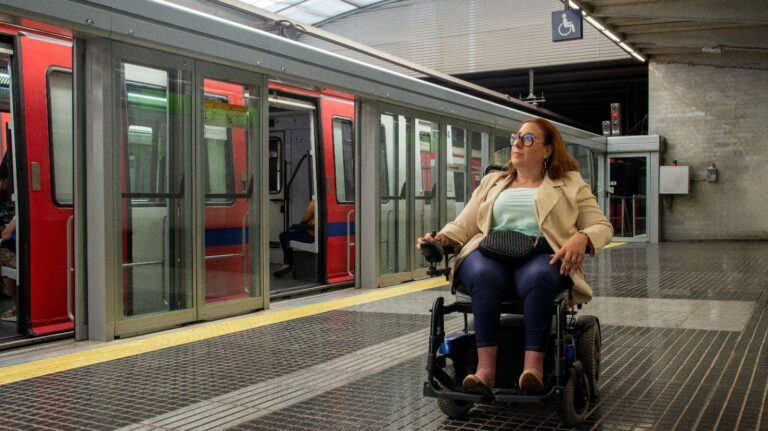
As cities densify and populations age, how are councils, communities and operators are redesigning mobility infrastructure so that every stage of the urban journey works for everyone.
While a key priority for urban planning should be that spaces are accessible to all, this isn’t always the case – in fact, accessibility and inclusion remains uneven across many towns and cities. While some progress has been made, many gaps persist in last-mile connectivity, multisensory wayfinding and safe active travel routes.
“As cities densify and populations age, inclusive design is essential to build resilience and to futureproof our spaces,” says Mei-Yee Man Oram, access and inclusive environments lead at global professional services firm Arup. “Accessibility is a climate and equity issue: without inclusive mobility, we risk locking people out of low-carbon transport options.”
Spacehive is a fundraising platform in the UK and Ireland for community projects that is designed specifically for ideas that improve local areas or help address local needs. Its CEO, Misha Dhanak, says accessibility is becoming an urgent priority because cities are growing denser, accessibility challenges have been historically overlooked, and inclusive design is essential not only for social participation but also for sustainable urban living.
FAST FACT: 21% of 1,195 disabled people surveyed said they face barriers when travelling. Source: National Centre for Accessible Transport, Bridging the gap in transport accessibility data, 2024
“Accessible infrastructure fosters social cohesion, helping everyone – regardless of age, ability or mobility – to participate fully in city life,” she explains. “As cities aim to meet net-zero targets and reduce reliance on private vehicles, accessible and inclusive infrastructure, from pedestrian-friendly streets to public transport, is crucial.”
Dhanak believes financial pressures mean councils need to think creatively – and crowdfunding and community-led initiatives provide a powerful blueprint for collaboration between local authorities, residents and local businesses.
“Blended funding, such as combining crowdfunding with council or business support, gives residents real decision-making power,” says Dhanak. “They can identify the gaps in their neighbourhood and decide what’s most needed – whether that’s adaptive cycling hubs, inclusive recreation spaces or a youth facility.
“Councils play a vital role in endorsing projects, providing match funding and supporting residents through planning and governance. It’s a shift from top-down planning to locally-led urban change.”
Levelling up
Arup’s audits and engagement with end users to understand lived experience show that infrastructure often fails to meet the needs of many marginalised groups, including disabled people and older adults.
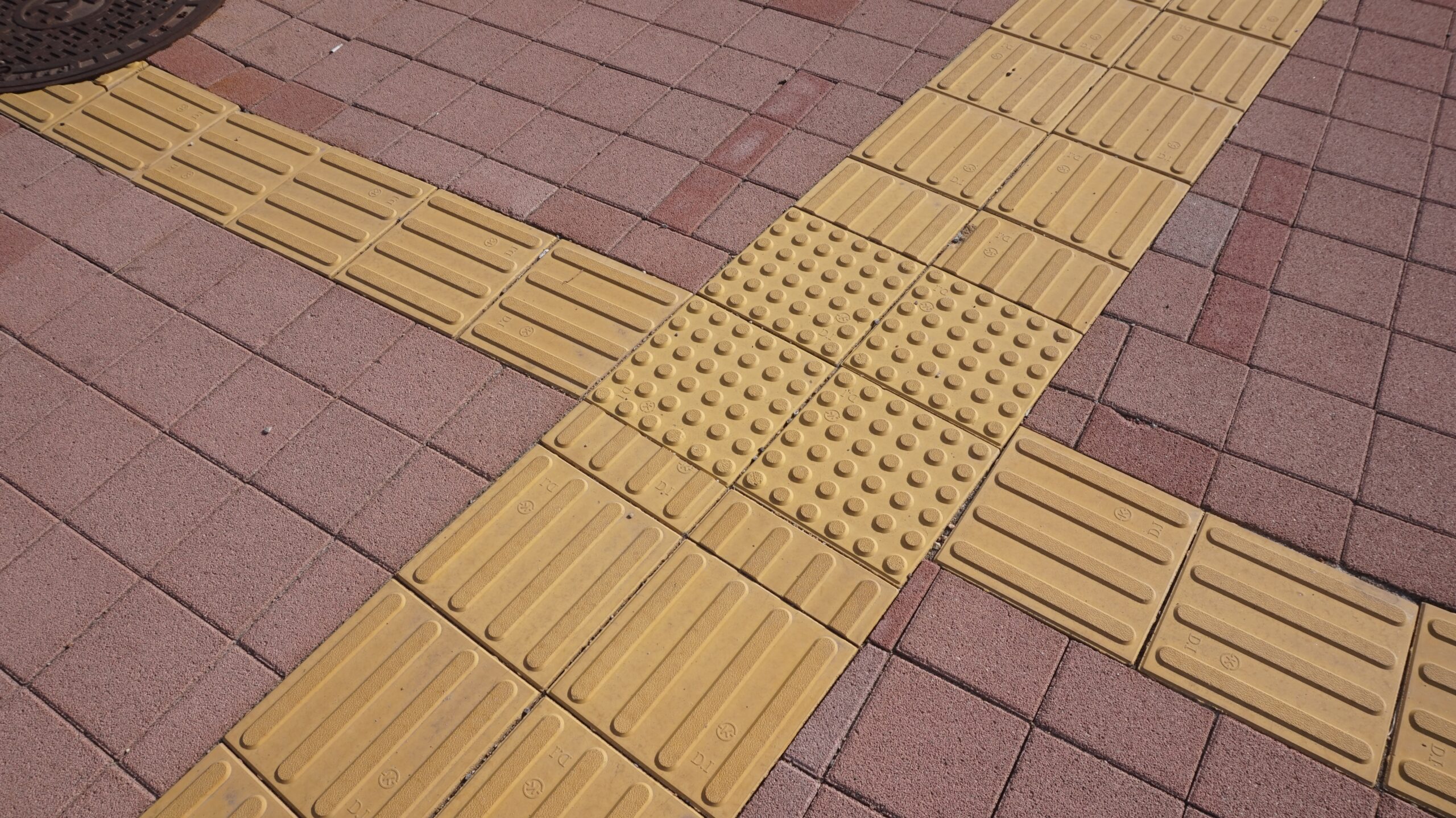
In the ‘Walking for Everyone’ guide, Arup, charity Living Streets and non-profit Walk Wheel Cycle Trust (formerly known as Sustrans) outline strategies including tactile paving, quiet routes and inclusive kerb design to support walking and wheeling, as well as consideration of the design of lighting and acoustics to facilitate safer spaces for gender equity and other marginalised groups.
“Including lived-experience engagement and inclusive design audits is important to embed these principles into design solutions and project outcomes, and it is great to see that local authorities are developing frameworks to help guide this within their jurisdictions,” says Man Oram.
FAST FACT: 48% of people with a learning disability surveyed said they find public transport hard to understand. Source: Mencap, public transport barriers report, August 2025
Data from the UK Department for Transport (DfT) shows that only 61% of disabled adults held a full driving licence in 2021, marking the importance of accessible public transport systems as part of urban planning. David Milner, managing director at urban design agency and think tank Create Streets, believes trams are part of the answer.
He says for too long, Britain has failed to build the local transport that its towns
and cities need to thrive, with too many relying on buses with small capacities for wheelchairs and prams. Trams offer level access at street level, with multiple doors and plentiful floorspace. However, trams are twice as expensive to build and difficult to permit by design in the UK.
“In Coventry, new track technology using lightweight concrete was laid in just eight weeks,” says Milner. “This was on a busy city road and they even kept the traffic flowing during construction. They built this by using existing highways and power, scraping away 30cm of asphalt and laying their new shallow track bed.
“To allow this technology to roll out across the country, we need to allow local authorities to operate tram lines without the burden of Transport and Works Act Orders and to update the code of practice in the New Roads and Street Works Act 1991 to adopt a principle of leaving utilities in place if the track doesn’t interfere.”
The SkyTrain, Vancouver’s automated rapid transit system, is another model that offers level boarding and low floor trains. All Vancouver SkyTrain stations were constructed with inclusion in mind so that every user has access to travel by SkyTrain as needed.
“Today’s urban mobility projects are combining public transportation with parks and other forms of green space – that is why they increase the overall inclusiveness of the entire system,” says Jake Fry, founding owner and partner at Smallworks, a Vancouver-based developer that creates sustainable adaptable housing for communities that require flexible living spaces.
“When designers create well designed plans for urban mobility systems, it makes it possible for
people to cycle, walk or take public transportation in the same manner.”
Cycling is another important access point. In Swansea, a community-led project called Hub on
the Hill created an accessible, sustainable bike hub to promote greener travel and help residents – and especially those who were less mobile – navigate the steep hills of Mount Pleasant.
Situated on an underutilised car park, it provides secure storage, an e-bike, a mountain e-trike and an e-bike charger. Funded via Spacehive, the initiative was inclusive: residents accessed bikes regardless of income, received training from Bikeability (the UK DfT’s national award provider for cycle training in England) and contributed through volunteering. “By combining adaptive transport, training and shared resources, the project lowered barriers to cycling, encouraged sustainable travel and strengthened local social ties,” says Dhanak.
Arup’s work with the Cities & Regions for Cyclists network also promotes inclusive cycling infrastructure as a core urban mobility strategy. “Cities that succeed in inclusive mobility share three traits: deep community engagement, cross-sector collaboration and a commitment to whole-life design,” says Man Oram. “Arup’s work on inclusive walking strategies in the UK also shows that small interventions – such as better crossings, seating and signage – can transform access.”
Sustainable choices
For drivers with extra accessibility needs, the rise in popularity of electric vehicles (EVs) has created new challenges. The UK EV charging industry is evolving to meet inclusivity needs and many people rely on cars due to location or individual circumstances – but without accessible charging, these drivers face barriers to EV adoption.
With 2.7 million disabled drivers expected on UK roads by 2035, addressing these barriers is critical. The PAS 1899:2022 standard – a British standard for accessible public EV charging – provides requirements for both hardware design and built environment integration. EV charging station company JOLT is actively working to meet and exceed these standards.
“JOLT manufactures its own charging points to maximise inclusivity, designing lighter cables and cable management systems that work for all users,” explains John Rainford, UK country manager for JOLT.
“Manufacturing our own charging points allows us to incorporate accessibility features from the ground up, offering single-handed operation with no flaps or twisting motions required and more flexible tethered cables with counterbalanced cable management systems – as well as flush mounting and dropped kerbs installed as standard on all on-street installations.”
Accessible infrastructure fosters social cohesion, helping everyone – regardless of age, ability or mobility – to participate fully in city life – Misha Dhanak, CEO, Spacehive
Heading design and manufacturing also means JOLT can make site-specific adjustments, such as the perforations added for visibility in the London Borough of Barnet, to meet the exact requirements of local authorities.
“Operators who depend on third-party, internationally-produced hardware simply cannot customise their equipment,” adds Rainford. “Softening standards would inevitably reduce accessibility and lead to poorer outcomes for disabled drivers.”
Making a sustainable transportation system available to everyone is an ongoing struggle. While EVs are great for the environment, every person should be able to access a sustainable means of transport should they wish – including those who don’t drive.
However, this can be a challenge – upgrading older transit systems into something that comply with modern accessibility and sustainability guidelines, for example, can be costly and challenging. Fry believes the problem is ensure both sustainability and accessibility are being addressed at the same time.
“Green transportation can’t serve anyone if it’s not designed to work for everyone,” he says. “All types of green vehicles must provide access to users with varying levels of disability. When cities are planning green transportation, they should also consider accessibility as a very important part of the process. This will ensure that green transportation provides benefits to all citizens.”
Towns and cities need adaptive infrastructure if all residents are to have equal access. Considering the entire process or experience of a journey rather than just the endpoints is important in urban planning, and collaboration across sectors as well as beyond site boundaries is necessary to ensure a seamless journey for everyone, regardless of their accessibility needs.
“Successful projects demonstrate that urban change works best when participatory,” concludes Dhanak. “Councils that listen, support and champion local ideas create trust, resilience and long-term capacity.
“Even small interventions can ripple through a neighbourhood, influencing behaviour, improving quality of life and strengthening much-needed social ties.”
Setting global standards
The UK leads the way in transport and mobility inclusivity, with many cities worldwide looking to London and replicating UK initiatives. JOLT’s collaboration with the Motability Foundation demonstrates how this leadership translates into inclusive infrastructure. JOLT designed its EVA 3 charging unit using the Motability User Engagement Report, which predated the PAS 1899:2022 standard but contained comprehensive real-world findings from disabled users’ lived experiences.This user-first approach resulted in five critical features: a lighter, more flexible tethered cable; a cable management system that counterbalances weight and prevents trailing; single-handed operation with no flaps to lift; no twisting motions required; and downward-facing dusk sensor lighting above cables for improved visibility and safety.
Through direct engagement, the Motability Foundation presented to JOLT teams internationally on inclusivity in mobility. These UK-developed standards have since been rolled out globally across Australia, New Zealand, Canada and shortly in the USA, demonstrating how British innovation in accessibility can set international best practice.
“The key lesson is clear: the most successful accessibility initiatives start with genuine user engagement, not just compliance requirements,” says JOLT’s John Rainford. “By working with disabled users and specialist firms, cities can create solutions that address real-world challenges and work for all.”
This article was originally published in the December 2025 issue of CiTTi Magazine.