

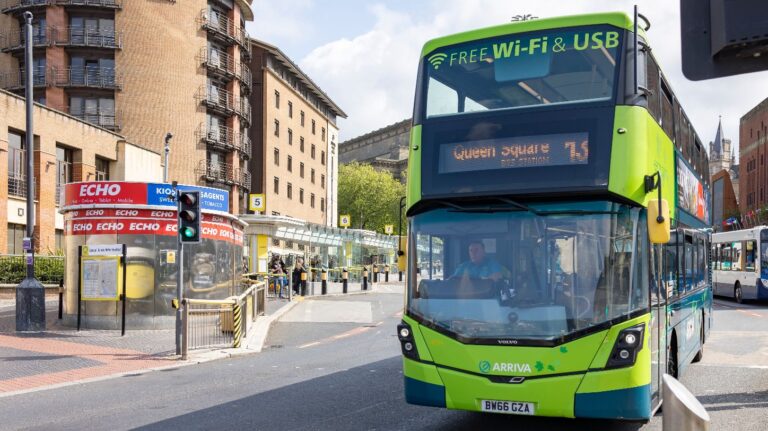
The UK government has confirmed a £3bn multi-year funding package for local bus services, intended to support lower fares, more frequent services and investment in infrastructure across England.
Announced by the UK Department for Transport (DfT), the funding will be allocated to local transport authorities through the Local Authority Bus Grant (LABG) and will run until the 2028 to 2029 financial year.
According to the government, almost £700m a year will be distributed and local authorities will be able to decide how the money is spent.
Councils will be able to use their allocations for measures including fare reductions, new or reinstated routes, support for socially necessary services, the introduction of zero-emission buses and improvements to bus stops and stations.
Transport secretary Heidi Alexander said the package was designed to support local authorities to plan and manage their networks over the longer term.
She said: “After years of decline, better buses are finally on the way. Our £3bn investment will give local authorities the long-term funding they need to deliver lower fares, more frequent services and the reliable transport that communities depend on.
“We’ve already extended the £3 bus fare cap to help people with their everyday journeys and now we’re backing this with the funding councils need to transform their local services.”
The announcement follows the Bus Services Act becoming law in October 2025. The legislation gives local authorities new powers over how local bus services are run and introduces greater protection for socially necessary routes.
Roads and buses minister Simon Lightwood said the funding was aimed at addressing historic challenges in local bus provision. He said: “For too long, passengers have been let down by unreliable services, sub-standard bus stations and over a decade of routes being cut.
“This £3bn boost will change this, providing passengers with lower fares, more frequent and reliable services and safer journeys – helping both ease the cost of living and making it easier for people to get to work, hospital appointments and social plans, boosting the economy.”
According to the DfT, the allocations bring together several existing bus funding streams into a single source, with a view to simplifying administration and giving local leaders more control.
The department said the funding is intended to support bus franchising where authorities choose to adopt this model, citing Greater Manchester’s Bee Network as an example.
As part of the same package, the government has also announced a £3m Bus Franchising Fund to support authorities developing or implementing franchised networks.
Industry and passenger groups have responded positively to the introduction of multi-year settlements, while highlighting the importance of delivery at local level.
Graham Vidler, CEO of the Confederation of Passenger Transport, said the funding now placed responsibility on authorities and operators to deliver changes on the ground.
“The time for buses is now. With multi-year funding finally in place, local transport authorities must get moving and invest in what matters most to passengers: more buses, faster buses and more reliable buses.
“Operators stand ready to work closely with authorities across the country to turn this funding into real improvements for the communities we serve,” Vidler said.
Passenger watchdog Bus Users UK said the stability provided by multi-year funding could help address service cuts and uncertainty.
CEO Lydia Horbury said: “Passengers have faced years of cuts and uncertainty, so long-term funding for buses is extremely welcome.
“Giving local authorities the stability to plan ahead and invest in the services their communities rely on is essential if we’re to reverse decline and rebuild confidence in bus travel.
“We particularly welcome the flexibility for authorities to prioritise what matters most to passengers, whether that’s lower fares, more frequent services, zero emission buses or safer, more accessible infrastructure.”
Jason Prince, director of the Urban Transport Group, said the settlement underlined the importance of buses within local transport systems.
“This funding emphasises the importance of bus as the backbone of our local transport networks,” he said.
“The multi-year settlement and the additional Bus Franchising Fund is an endorsement of transport devolution, providing local leaders with the certainty they need to plan and invest in better bus services to meet the needs of local communities.”
The government has positioned the bus funding within a wider set of public transport measures aimed at addressing cost of living pressures.
It has frozen regulated rail fares for the first time in 30 years and is progressing plans for Great British Railways, which are intended to modernise fares and ticketing and deliver “better value for passengers” through measures such as tap-in, tap-out and digital ticketing.
Subscribe for free to the quarterly print edition of CiTTi Magazine for exclusive insights into the key business issues shaping the future of sustainable urban mobility. Stay ahead of the curve by signing up for the free CiTTi weekly newsletter, delivering sector-leading content straight to your inbox every Friday. For even more updates, follow CiTTi Magazine on X (formerly Twitter) and LinkedIn. LinkedIn followers can also subscribe to Urban Digest — a weekly newsletter curated exclusively for the CiTTi Magazine LinkedIn community.