

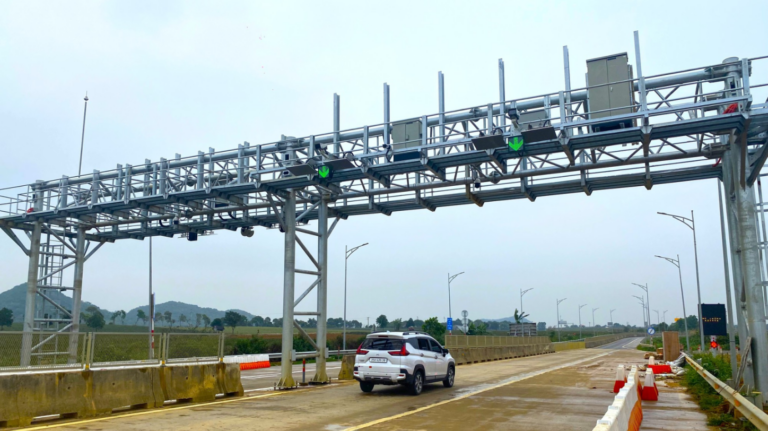
Vietnam is set to begin ‘smart’ toll collection on five state-funded sections of the eastern North–South Expressway from February 2026.
This follows the completion of integrated intelligent transport systems (ITS) and non-stop electronic toll collection (ETC) infrastructure and a mandatory trial period designed to validate performance and accuracy.
Vietnam’s Road Administration has instructed multiple project management boards to conduct trial operations and assess key performance indicators (KPIs) for the ETC system, including daily reporting and recommendations on when to move into full tolling.
The Ministry of Construction’s portal said the Road Administration’s letter (No. 120/CĐBVN-KHCN,MT&HTQT) requires system checks against approved test scenarios between 6–12 January 2026, followed by KPI evaluation from 13 January 2026.
The five expressway sections identified for the February rollout are Mai Sơn–National Highway 45, National Highway 45–Nghi Sơn, Nghi Sơn–Diễn Châu, Vĩnh Hảo–Phan Thiết and Phan Thiết–Dầu Giây.
Nguyễn Viết Huy, deputy director of the Vietnam Road Administration, said the core ITS and ETC works on the five projects were “basically completed”, including cameras, software deployment and route operations centres.
He added that the ITS deployment on the eastern North–South Expressway is the first state-invested project of its kind, meaning the required accuracy threshold is “very high”, at 99.8%.
FREE: Subscribe to the monthly Road User Charging Newsletter!
Operationally, the system is being implemented using an ETC layout that combines multi-lane free-flow entry (without barriers) with single-lane ETC exit (with barriers), and no manual toll lanes. The Ministry of Construction’s portal said this configuration is already in place on the Mai Sơn–National Highway 45 section.
The smart tolling package is designed to do more than collect fees. Local reporting on the rollout said the ITS is intended to support expressway operations, enforcement and safety, including clear number plate recognition even at higher speeds and the automated detection of behaviours such as speeding, lane encroachment and illegal stopping, with incident alerts when crashes or disruptions occur.
The system also includes weigh-in-motion equipment installed along the corridors. According to local reporting, when an overweight vehicle is detected, the system can trigger warnings on variable message signs and log evidence for enforcement action, supporting road asset protection and safety outcomes.
The move sits within a broader push to expand tolling on Vietnam’s publicly funded expressway network. VietnamNet reported in August 2025 that Vietnam’s Ministry of Construction had approved a plan for toll collection to begin on 18 state-invested expressways from January 2026, including the same five phase-one North–South sections now preparing for ‘smart’ toll collection.
Vietnam has also been tightening policy around non-stop tolling over several years. In 2022, the government’s news portal reported that electronic toll collection would be compulsory for vehicles travelling on expressways, with the policy positioned as a means to reduce congestion, increase transparency and phase out manual toll collection.
Discover the key trends and challenges shaping the future of user-funded transportation – spanning tolling, road pricing and usage-charges – at Akabo Media’s global Road User Charging Conference series. Join senior decision makers from around the world as they tackle the issues defining the industry in Brussels (March 2026), Abu Dhabi (May 2026), Washington DC (September 2026), and Singapore (December 2026). Gain invaluable insights, share innovative ideas and network with global leaders driving the transformation of transportation systems. Click here to learn more and secure your place at these unmissable events!