


As 2025 draws to a close, the editorial team behind City Transport & Traffic Innovation Magazine (CiTTi) – the UK’s leading B2B publication dedicated to advancements in sustainable urban mobility – reflects on a transformative year for the transportation sector, as well as the evolution of the CiTTi brand itself.
A year on from the arrival of the new Labour government, the UK’s urban mobility sector saw a flurry of activity actuated in new funding, projects and schemes implemented across the UK. To support the rollout, advanced technologies were heralded via the passing of legislation – such as accelerating driverless taxis – that aimed to put the UK in the urban mobility driving seat.
This included massive changes to bus services, with the Welsh government reiterating its plans to franchise model will replace the current de-regulated system. Its launch is intended to begin in South West Wales in 2027, before North Wales in 2028, South East Wales in 2029 and Mid Wales in 2030.
The UK Department for Transport (DfT) also announced that the Bus Services Bill has became law, now referred to as the Bus Services Act. The bill was first introduced into the House of Lords December 2024, with the passing of the bill into law ending the risk of routes being scrapped at short notice by tightening the requirements for cancelling vital routes.
Autonomous and decarbonised bus systems continued to seen as the best route saving what is widely regarded as a sector in need of support, with billions pored into local authorities to stem the decline.
The Autumn Budget saw the government commit to electric vehicle (EV) mileage fees as an increasingly larger share of private vehicles transition to EVs. The government will also raise the threshold for the Vehicle Excise Duty Expensive Car Supplement for zero-emission vehicles from £40,000 to £50,000 from April 2026.
This was followed by the long-awaited launch of Great British Railways (GBR), a national, publicly owned company, which will bring together the management of passenger services and rail infrastructure, formed following the passing of the Railways Bill into law.
Years of underperforming services had led to public calls for a streamlined rail system, with GBR already incorporating South Western Railway and c2c rail, for services to & from London, Southend & elsewhere in Essex, as the first rail services to transfer into public ownership.
And lastly, the word ‘Tariff’ was on everyone’s tongue following the UK being subjected to a 10% import tariff by US president Donald Trump on 3 April 2025. The Uk government responded by releasing a document outlining potential retaliatory tariffs on US imports.
2025 also marked a year of growth for CiTTi Magazine and its associated events, marked by the success of the fourth annual CiTTi Awards and the first foray into foreign markets for the Road User Charging Conference series.
Continue reading below to further explore some of the key themes and stories from 2025…

TfL price hike makes London’s public transport most expensive in the world
 In March, Transport for London (TfL) revealed new prices for its transport network, with the adjusted fees making it the most expensive public transport system in the world. TfL announced that Tube and rail fares will rise by 4.6% in line with national rail fare increases from March 2025, raising the daily cap for Zone 1 travel by 40p from £8.50 to £8.90.
UK to introduce EV taxation from April 2025

The UK government will introduce vehicle excise duty (VED) charges for electric vehicles (EVs) from 1 April 2025, ending their longstanding tax exemption. The move, first announced by the Conservative government in 2022 and reaffirmed in Labour’s 2024 Autumn Budget, will bring EV taxation in line with petrol and diesel vehicles.
UK DfT £650m Electric Car Grant scheme

The UK transport secretary has announced a £650m Electric Car Grant (ECG) scheme, worth up to £3,750 per car, to help drivers switch to electric vehicles (EV). ECG will have a eligibility dependent on the highest manufacturing sustainability standards, DfT reports, with up to £3,750 available at the point of sale for new eligible EVs priced at or under £37,000.
Next three UK train operators transferring back to public services confirmed

The UK Department for Transport (DfT) has revealed the next three train operating companies whose services will transfer into public ownership. After Greater Anglia’s services transfer on 12 October 2025, West Midlands Trains services will then follow on 1 February 2026, before Govia Thameslink Railway’s services on 31 May 2026. This means by the middle of next year, 8 in 10 passenger rail journeys that DfT is responsible for will be owned by the public.
American EV maker Canoo files for bankruptcy

American advanced mobility company and electric vehicle (EV) manufacturer Canoo has announced that it has filed a voluntary petition for relief under Chapter 7 of the U.S. Bankruptcy Code. Canoo, which had developed the LDV130 electric cargo van, failed to raise sufficient funding to overcome its debts. The filing will result in the federal appointment of a Bankruptcy Trustee to oversee the liquidation of the Company’s assets and the distribution of proceeds to creditors.

This year, CiTTi Magazine showcased the breadth and impact of its publisher, Akabo Media, and its portfolio of industry-leading events. Chief among these was the fourth annual CiTTi Awards which celebrated excellence and innovation across the transport and mobility sectors. The magazine also spotlighted Akabo Media’s expanding roster of globally recognised Road User Charging Conferences, held in Brussels, Abu Dhabi, Miami and Singapore, further cementing its position as a leader in the field of user-financed transportation.
In addition, CiTTi provided coverage of other key Akabo Media events, including the 29th Supply Chain Excellence Awards, which recognises outstanding achievements in logistics and supply chain management.
CiTTi Awards 2025
See the highlights from the fourth annual CiTTi Awards, which took place on Tuesday 25 November 2025 at the stunning De Vere Grand Connaught Rooms in London! The event was a night of celebration, championing the hard work and innovation demonstrated by the UK public-sector and their private-sector partners in enabling the sustainable, safe and efficient movement of people, goods and materials through urban environments.
Hosted by acclaimed comedian Lucy Porter, the ceremony championed and celebrated the hard work and innovation demonstrated by UK public-sector organisations and their private-sector partners in enabling the sustainable, safe and efficient movement of people, goods and materials through urban environments.
Fulfilment & Last Mile Expo to launch at NEC in March 2026

A brand-new two-day trade show dedicated to post-warehouse logistics will debut at the NEC Birmingham on 18-19 March 2026, co-located with IntraLogisteX, the Sustainable Supply Chain Exhibition and Robotics & Automation.
Building on the organiser’s 2022 pilot, Final Destination Logistics, the new show will spotlight fulfilment operations, delivery innovation and last-mile execution as retailers, brands and logistics providers respond to rising service expectations and decarbonisation pressures in urban areas.
The launch will also sit alongside Akabo Media’s expanding international portfolio, with IntraLogisteX editions taking place in Abu Dhabi, Dallas and Singapore in 2026.
Road User Charging Conference 2025
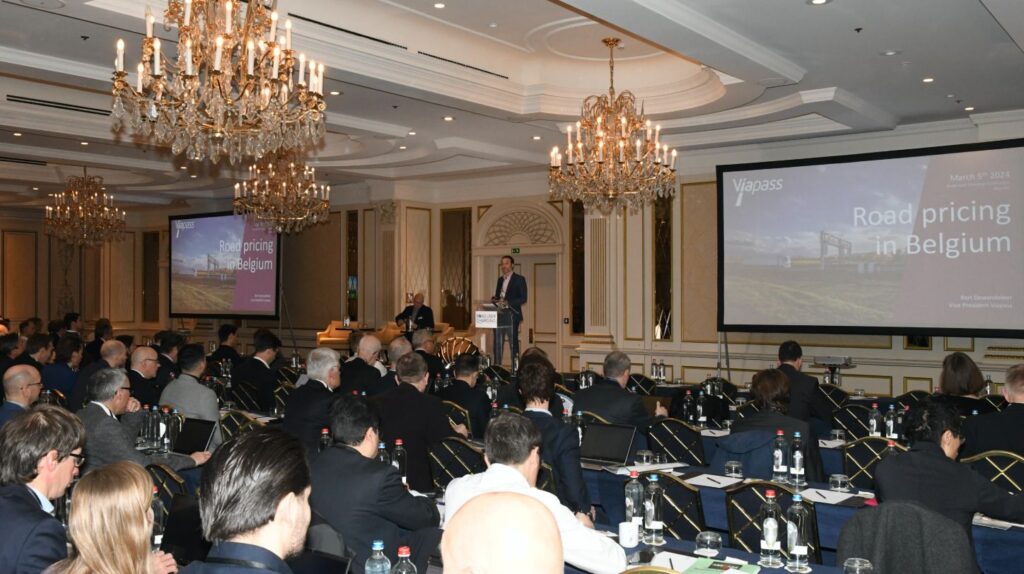
As the world’s longest-running independent annual event for the global user-financed transportation community, the Road User Charging Conference continued to shape the future of transportation and mobility. The 22nd edition of the world’s longest-running independent global annual gathering of user-financed transportation professionals, which took place at Steigenberger Wiltcher’s in Brussels, Belgium, on 4-5 March 2025, and saw more than 200 tolling, mobility pricing and road-usage charging practitioners in attendance.
This year’s agenda delved into critical themes, including interoperability, evolving charging models, user acceptance, environmental sustainability, equity and the politics driving tolling and RUC adoption. With a growing focus on smart technology, data integration and policy innovation, attendees explored how user-financed transportation schemes can address the dual challenges of funding critical infrastructure and meeting climate goals.
Road User Charging Conference Middle East & Africa
The May 2025 issue of CiTTi Magazine included an exclusive and comprehensive preview of the Road User Charging Conference Middle East & Africa (MEA) in Abu Dhabi on 28-29 May 2025.
Now in its second year, the 2025 Middle East & Africa edition brought together public- and private-sector professionals from across the UAE, Nigeria, Kenya, Ethiopia, Morocco, Qatar and beyond to discuss region-specific challenges and global best practices.
Road Pricing Summit 2025
The Road Pricing Summit came to Miami, Florida 18-19 September 2025 with a sharpened brief: to transform declining gas tax revenues into sustainable road funding.
This year’s Road Pricing Summit showcased the latest tolling technologies, road-usage charging programmes and intelligent transport systems being trialled and implemented across the USA. With gas tax revenues set to erode as electrification accelerates and vehicles become more fuel efficient, and with political pressure building in congested corridors, the timing will be deliberate. The Summit will examined how pricing can fund roads fairly, support network performance and earn public trust.
Watch highlights of the Sustainable Supply Chain Exhibition!
Sustainable Supply Chain Exhibition 2025 – co-located with IntraLogisteX and Robotics and Automation – enjoyed a hugely successful launch year after nearly 10,000 attendees descended upon halls 6 and 7 of the NEC Birmingham.

TfL launches safety campaign encouraging active bystanders
Greater Manchester Police utilise Bee Network to catch distracted drivers
Hawai‘i launches road usage charge for electric vehicles
Midlands Rail Hub receives funding via Spending Review
Pennsylvania Turnpike introduces open road tolling on eastern section

Blocked bays and failed handshakes: many public EV chargers are unusable – despite being ‘online’
The more in favour of welfare you are, the more likely you are to support cycle lanes
Uganda’s ride-hailing motorbike service promised safety – but drivers are under pressure to speed
Here’s why some people still evade public transport fares – even when they’re 50 cents
The history of women cyclists – an uphill climb to equality

MTA Bridges interview

The September 2025 issue of CiTTi Magazine contained an interview with MTA Bridges and Tunnels’ chief operating officer Allison C. de Cerreño to uncover the secrets behind New York City’s road user charging scheme. The year marked was marked by a public disagreement between the transport body and the US President Donald Trump. In January 2025, after six years of refinement, the Central Business District Tolling Program was launched in an effort to reduce congestion, fund NYC’s transportation and improve its air quality in the designated Congestion Relief Zone.
Going Underground

In May, CiTTi Magazine featured an in-depth analysis of Cross River Partnership’s (CRP) six-month trial beneath London’s Waterloo Station testing how disused rail infrastructure can power zero-emission, multimodal freight, offering a scalable blueprint for sustainable last-mile deliveries across the UK capital. The Waterloo Freight Hub trial built on findings from CRP’s ‘On Track for Sustainable Logistics’ series, which champions rail freight’s role in decarbonising London’s supply chains.
Harbouring innovation

In May, CiTTi Magazine spoke to Mike Dawson, Belfast Harbour’s director of people and digital transformation, about Belfast Harbour’s Harlander project. Utilising autonomous vehicles, the project is not only introducing Northern Ireland’s first autonomous shuttle service but is also laying the groundwork for greener, smarter and scalable transport at UK ports and beyond.
Changing currents

Once a cornerstone of Britain’s industrial revolution, inland waterway transport has dwindled. In February, CiTTi Magazine investigated the revival domestic waterway freight and what is means for the larger freight sector.
Circuit breakers
In the February issue, CiTTi Magazine delved into the phenomenon surrounding the country’s burgeoning public charging infrastructure has faced an unexpected challenge: vandalism and theft. Featuring interviews from CPOs, security services and local authorities and delving into how each can disrupt this illicit trade in its early stages, preventing it from escalating further across the UK.

Railways Bill becomes law establishing Great British Railways

In November, the UK government passed the Railways Bill into law, initiating the creation of Great British Railways (GBR). GBR will be a new publicly owned company, which will bring together the management of passenger services and rail infrastructure. GBR will be accountable to passengers, freight customers and taxpayers and will drive a relentless focus on responding to their needs, the government stated.
Bus Services Bill becomes law

In October, the UK Department for Transport (DfT) announced that the Bus Services Bill became law, now referred to as the Bus Services Act. The act aims to grant greater powers to local authorities over their bus services, the devolution of power enabling each to franchise, select timetables and decide routing. The government will now empower councils to identify services which they deem as socially necessary, meaning strict requirements must be followed if operators wish to cancel or change them.
How potential UK retaliatory tariffs could impact the transport industry

In April, a potential US-UK tariff war was on the horizon. Following the UK being subjected to a 10% import tariff by US president Donald Trump on 3 April 2025, the UK government released a document outlining potential retaliatory tariffs on US imports. British businesses are now being invited to share their views on what a future UK response should look like. CiTTi Magazine analysed the proposals to understand the possible implications for the transport industry.
Budget 2025 confirms EV mileage fees, rail fares freeze and extra funding for roads and charging

In November, chancellor of the exchequer Rachel Reeves presented the UK’s Autumn Budget, which included several key measures affecting motorists and the transport sector.
The chancellor confirmed a new mileage-based user fee for electric vehicles (EVs), alongside a further year of frozen rail fares in England, new support for EV charging infrastructure and backing for major road and rail schemes. At the centre of the transport package is Electric Vehicle Excise Duty (eVED), a national mileage-based charge for electric and plug-in hybrid cars from April 2028.
USDOT suspends approval of state EV charging plans

In February, the US Department of Transportation’s (USDOT) Federal Highway Administration (FHWA) announced the suspension of approvals for ‘State Electric Vehicle Infrastructure Deployment Plans’ under the ‘National Electric Vehicle Infrastructure (NEVI) Formula Program’, effectively freezing related funding until further notice. In a memo issued on 6 February 2025, FHWA stated that all prior NEVI Formula Program guidance has been rescinded, with new guidance to be developed in alignment with updated federal policy objectives.
Subscribe for free to the quarterly print edition of CiTTi Magazine for exclusive insights into the key business issues shaping the future of sustainable urban mobility. Stay ahead of the curve by signing up for the free CiTTi weekly newsletter, delivering sector-leading content straight to your inbox every Friday. For even more updates, follow CiTTi Magazine on X (formerly Twitter) and LinkedIn. LinkedIn followers can also subscribe to Urban Digest — a weekly newsletter curated exclusively for the CiTTi Magazine LinkedIn community.